
Weather / Forecasts
City forecasts: a 7-day and hourly outlook for your town.
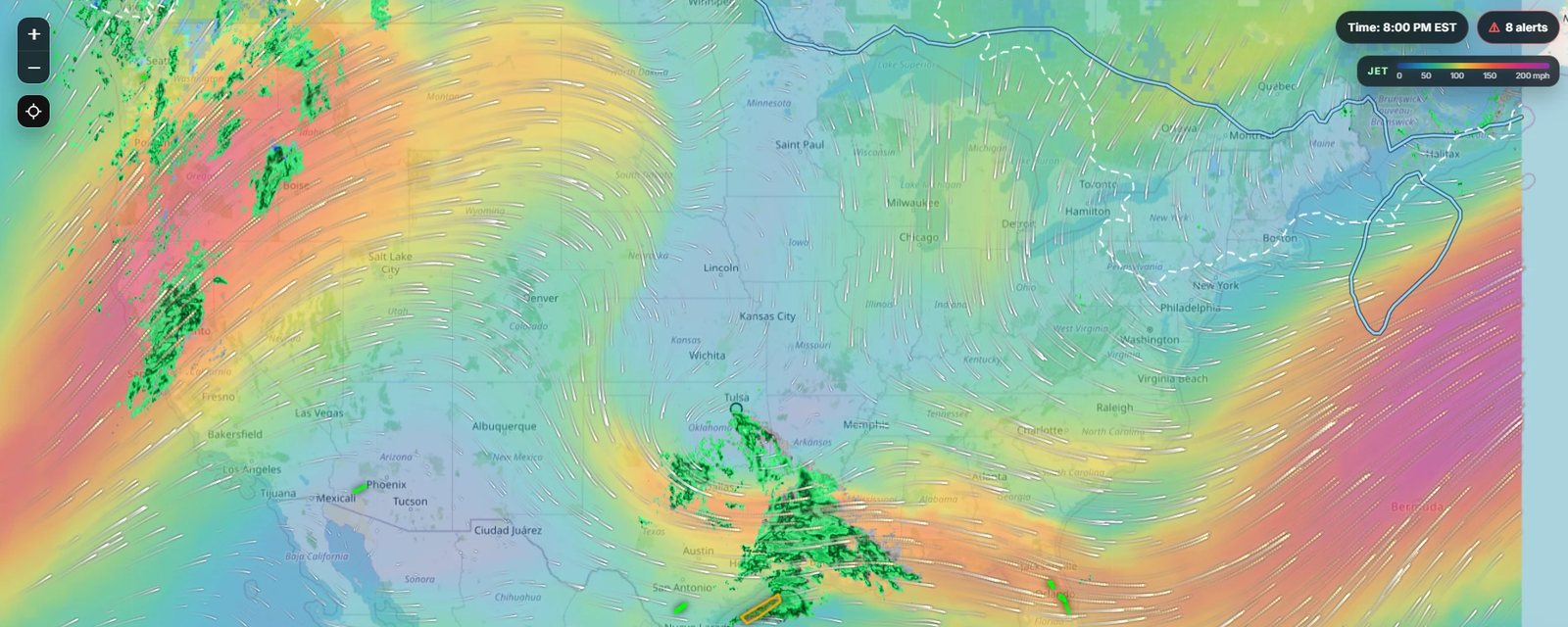
The radar shows the country. The city pages bring it down to one place: yours.
01What is on a city page
- The 7-day outlook. Day and night periods with conditions, highs and lows, and the forecaster's written detail for each period.
- Hourly trends. Temperature and conditions hour by hour, so you can see when the front arrives rather than just that it will.
- Local radar. The same map as the home page, framed on that city.
- Active alerts. If the National Weather Service has an alert in effect for the location, it appears on the page.
There are also standalone 7-day and hourly pages that follow your current location or a place you search for.
02Where the forecast comes from
Every forecast on these pages is guidance from NOAA and the National Weather Service. NWS forecasts are produced on a fine grid covering the whole country and adjusted by meteorologists at local forecast offices who know their terrain. That is why a mountain town and the valley city twenty miles away can show meaningfully different numbers.
Each page shows when the guidance was issued. That timestamp is the honest way to present a forecast: it is a prediction made at a particular time, not a live observation of the temperature outside.
03Finding a place — including small ones
Open Search in the navigation and type a city with its state, or a ZIP code. You can also browse the directory state by state. The directory is built from the U.S. Census list of places, which means it reaches well past the usual top-100 cities to the small towns where a lot of the country actually lives.
A few tips for using a forecast well:
- Read the written detail, not just the icon. "Showers likely, mainly after 2pm" is far more useful than a rain cloud.
- Treat days six and seven as a trend. Skill drops as the forecast reaches further out.
- Check back. A forecast is revised several times a day as new data arrives.
Orbital Overview is an independent project from the Engineer.Guide lab. It uses public data from NOAA and the National Weather Service and is not affiliated with or endorsed by those agencies. Weather data can be delayed or unavailable. For warnings and safety decisions, follow the National Weather Service and your local emergency officials.
Questions
Where do the weather forecasts come from?
Forecast guidance comes from NOAA and the National Weather Service. The displayed issue time shows when the guidance was published; a forecast is not a live temperature observation.
How do I search for a city?
Open Search in the top navigation and enter a city with its state, or a ZIP code, then choose a result. You can also browse the city directory by state.
Does Orbital Overview have forecasts for small towns?
Yes. The city directory is built from the U.S. Census list of places and includes small towns as well as large cities.
More from the Orbital Overview series
15 National Park Weather Forecasts on Orbital Overview ↗ 16 ThermalEarth: Land-Surface Temperature on Orbital Overview ↗ 17 Coastal Observations and Wave Forecasts on Orbital Overview ↗