
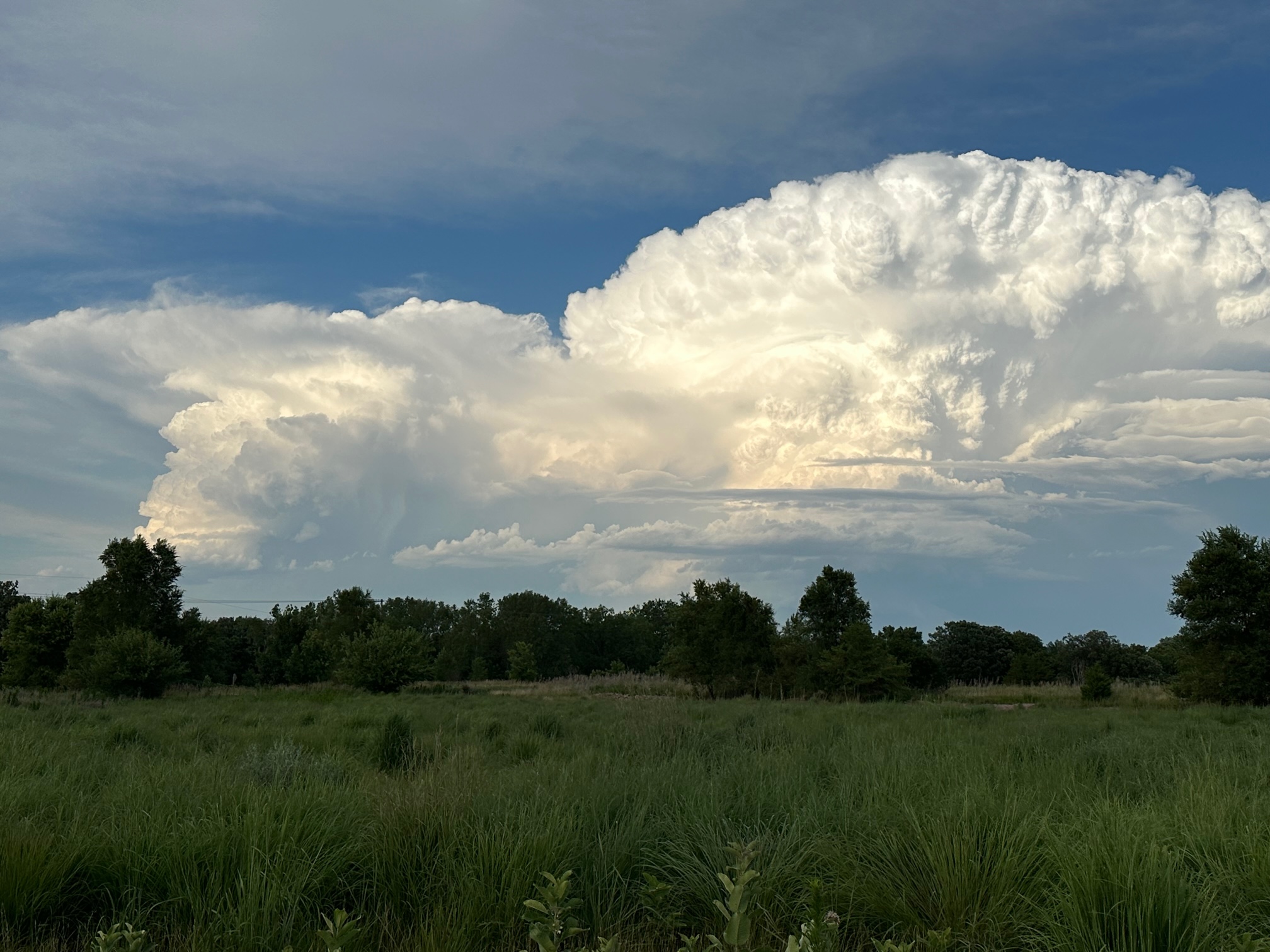
Most weather apps give you a rain percentage and stop there.
But “70% chance of rain” does not tell you whether that rain comes with lightning, damaging wind gusts, hail, or just a quiet steady drizzle.
The ingredients that turn rain into a thunderstorm are already tracked by modern weather models. The problem is that most consumer weather products do not surface that signal in a simple, readable way.
That is why OrbitalFusion created the Thunder Index: a 0-100 storm signal that answers the question people actually ask:
“Is it going to storm?”
The Thunder Index is not a rain chance. A score of 62 does not mean there is a 62% chance of storms. It means the atmosphere is strongly loaded with thunderstorm-supporting ingredients.
The index is part of OrbitalFusion, a proprietary blended forecast system developed by the Engineer.Guide Research and Development Lab for active city forecast pages on Orbital Overview.
It blends real storm physics from short-range forecast guidance with extended-range pattern guidance in a way that stays more honest about what can and cannot be known at each lead time.
The result is a readable storm signal that helps users understand whether the forecast supports ordinary rain, scattered thunder, organized storms, or severe weather potential.
Why the Thunder Index exists
Weather apps are good at showing icons. They are not always good at explaining risk.
A lightning bolt icon five or seven days away can look confident, but no model can precisely resolve a neighborhood thunderstorm that far in advance. Thunderstorms are small, fast-changing, and heavily dependent on local boundaries, instability, moisture, lift, and timing.
The Thunder Index was built around a simple philosophy:
Show what is actually knowable at each forecast range.
That means the index has two modes.
Mode 1: Near-Term Signal, hours 0-48
The near-term Thunder Index is built for the short-range window where storm structure starts to matter more directly.
It blends normalized storm-support ingredients into a single 0-100 signal, but the public product is meant to explain interpretation rather than expose the internal operational recipe.
When the score is labeled Near-Term Signal, it means the system is reading active storm-support context from short-range guidance, not just broad rain pattern.
Mode 2: Extended Signal, days 3-10
Past the short-range window, OrbitalFusion switches to a more honest approach.
Instead of pretending to know whether a thunderstorm will hit a specific neighborhood six or eight days away, the Thunder Index switches to broader pattern guidance.
At this range, the index focuses on whether the large-scale environment generally supports storms rather than precise storm placement.
When the score is labeled Extended Signal, it means the pattern supports storminess, but it should not be read as a precise thunderstorm prediction.
OrbitalFusion also applies quality-control logic to reduce false thunder signals when the environment does not support actual thunderstorm behavior. The exact operational weighting, thresholds, and calibration logic are proprietary to Engineer.Guide and OrbitalFusion.
The score stays on the same 0-100 scale, but it is always labeled by forecast mode so users can tell the difference between near-term storm signal and longer-range pattern guidance.
Thunder Index labels
| Score | Label |
|---|---|
| 80-100 | Severe Storm Signal |
| 60-79 | Strong Storm Risk |
| 40-59 | Thunderstorm Possible |
| 20-39 | Low Storm Signal |
| 0-19 | Minimal Storm Signal |
Every score also carries a confidence tag. High-confidence signals use fuller data availability, blended signals reflect partial availability, and early guidance signals indicate broader pattern support at longer ranges.
What a high Thunder Index actually means
This is the part that matters most for real users.
The Thunder Index is not just a number. It describes the kind of weather the atmosphere is capable of producing.
40-59: Thunderstorm Possible
At this level, the supporting signals overlap, but they are not extreme.
This usually means scattered thunderstorms are possible. Users should expect rumbles of thunder, brief downpours, occasional cloud-to-ground lightning, and short-lived storms.
Many storms in this range are pulse storms. They build quickly, rain hard for 20-40 minutes, and then collapse.
Outdoor plans need a backup, but most of the day may still be usable.
60-79: Strong Storm Risk
At this level, the ingredients are more robust together.
This is where storms stop being background weather and start becoming events.
A Strong Storm Risk signal may support:
- Frequent lightning
- Rapid storm growth
- Damaging wind gust potential
- Hail potential
- Stronger and longer-lived storm cells
- More organized storm clusters or lines
The key difference is storm organization. When multiple storm-support signals align, storms can become stronger, last longer, and travel farther.
This is the range where users should pay closer attention to hourly timing, radar, and local alerts.
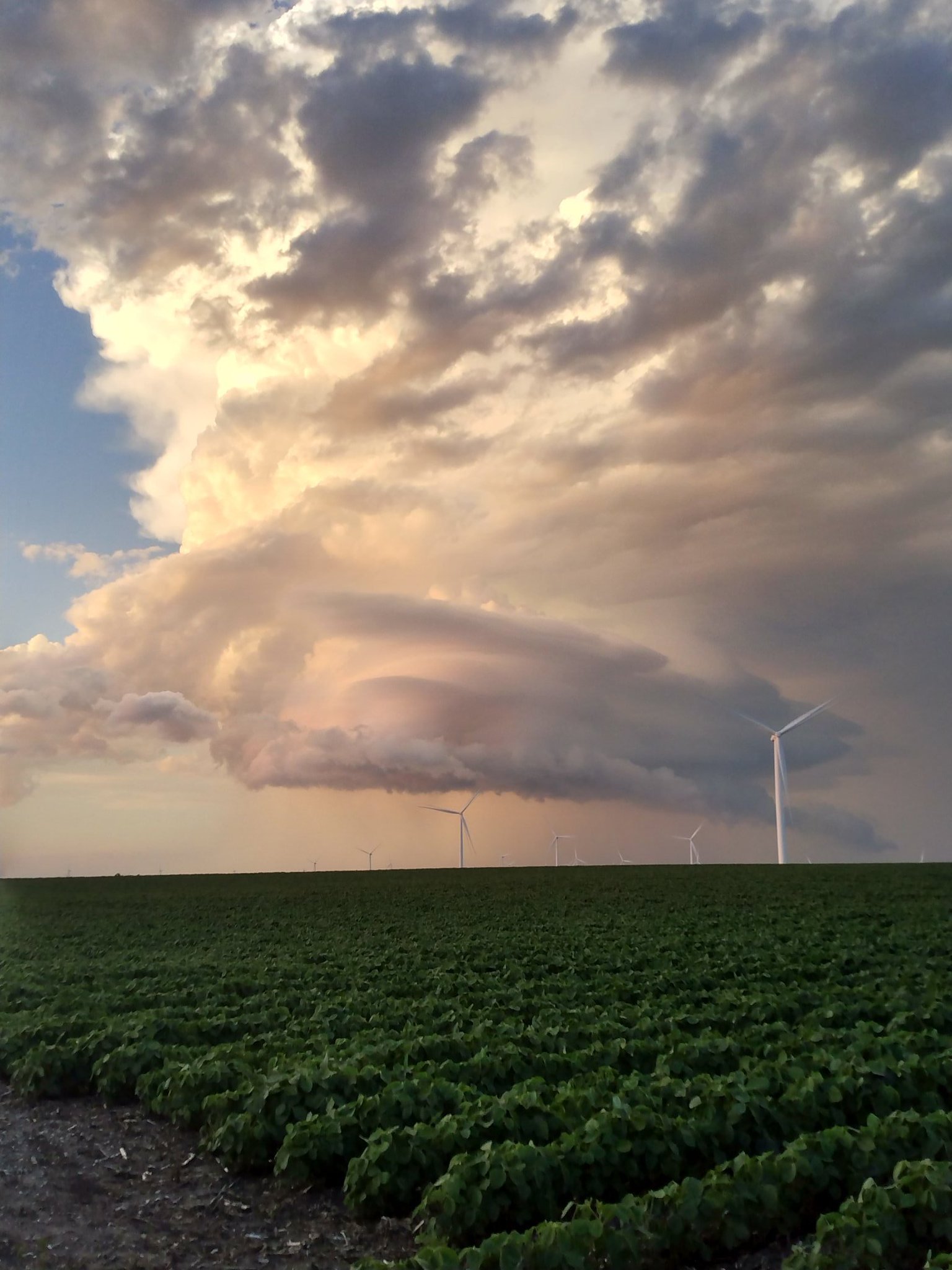
80-100: Severe Storm Signal
This is the highest tier.
At this level, the atmosphere is strongly loaded, and the signal suggests a higher ceiling for organized, electrically active, and potentially severe storm behavior.
This is supercell and squall-line territory.
A Severe Storm Signal can indicate support for:
- Very frequent lightning
- Explosive thunderstorm development
- Damaging straight-line winds
- Large hail potential
- Rotating updrafts
- Flash-flood-rate rainfall
- Fast changes in sky conditions
At this level, the page should push users toward hourly timing, radar, warnings, and official safety information.
The Thunder Index is designed to describe the signal, not replace official alerts. For life-safety decisions, users should always follow local National Weather Service warnings and guidance from official emergency sources.
Why this is different from a rain percentage
A rain chance answers a narrow question:
“Will measurable precipitation occur?”
The Thunder Index answers a different question:
“Does the atmosphere support thunderstorm behavior?”
That difference matters.
A rainy day can have a high precipitation chance and a low Thunder Index. That could mean steady rain, drizzle, or a stable frontal system.
Another day might have a lower rain chance but a higher Thunder Index. That could mean not everyone gets rain, but any storm that forms could become intense.
That is why the index is a signal, not a probability.
The honest forecast philosophy
Three design choices define the Thunder Index.
1. The index can say “no”
The score is designed to avoid false alarms. If the atmosphere does not show meaningful thunderstorm support, the signal stays low.
2. Forecast range is respected
Near-term scores use storm ingredients. Extended scores use pattern support.
The product does not pretend that day-8 lightning precision exists.
3. Confidence is shown
If the input data is incomplete, the confidence tag says so.
That gives users a better understanding of how much trust to place in the number.
How often the index updates
The Thunder Index recomputes automatically every few hours for each supported city. As new forecast runs become available, OrbitalFusion refreshes the score so the page reflects the latest available guidance.
This gives each city page a fresh, physics-backed storm signal without pretending that weather is more certain than it really is.
Final thought
The Thunder Index exists because people do not just want to know whether it might rain.
They want to know whether the sky is loaded.
They want to know whether the weather could interrupt a game, cancel an outdoor plan, produce dangerous lightning, knock down limbs, or develop into something severe.
That is the purpose of the Thunder Index:
A simple storm signal built from real atmospheric ingredients, honest forecast range, and transparent confidence.
Disclaimer: The Thunder Index is a storm signal, not an official alert product, and it does not replace National Weather Service watches, warnings, or emergency alerts. For safety decisions, follow official National Weather Service forecasts and local emergency guidance.